
Free London Attractions
There is loads to do in London, even when you are on a budget. Give your credit card a rest with these…


Choosing the right A-level subjects can feel really tough, but if you are methodical, take your time, and ask lots of questions you will find the combination which is right for you. There are over 40 subjects examined at A-level, and even though it’s unlikely that your sixth form offers that many, you should still have a lot of choice. However, the decisions you make now will set you on a course that can be difficult to change, so it’s important to make the right subject choices at this early stage.
A-level subjects range from ones you’ve probably already met at GCSE to ones which sound interesting but which you may not know much about.
It’s important to choose subjects you enjoy doing. Even if you are good at a certain subject, you might not actually enjoy it all that much. There’s no point going through college and never looking forward to lessons because you don’t like them. This in turn may make you feel you can’t cope with the work and make you feel stressed in the long-term. If you look forward to lessons, chances are you will approach them confidently and do well in them.
In thinking about whether you will enjoy a subject you should consider two things about it: the content of the subject and the skills it requires. You should have a real interest in the content – the things that you learn about – but you should also be confident that you have or can develop the skills that the subject requires. Each subject involves a different mixture of activities. One subject might require a lot of learning detail, another might require a lot of independent reading, some subjects involve a lot of essay writing, others a lot of creativity. Each of these activities requires skills you may or may not enjoy. The way a subject is assessed might also be important to you, particularly if assessment involves a lot of project work.
If you have clear ideas about what you want to study at university, you should check whether your plans require specific subjects. Your school should be able to provide careers advice and testing if you need to clarify your long-term plans before choosing A-level subjects, but don’t feel you have to nail down your future plans before choosing A levels. Keeping options open is a good idea but check that your A-level choices don’t rule out degrees you’re interested in.
Breadth of subjects is valued by universities, so subjects with significantly overlapping curriculums should be avoided where possible e.g. Economics and Business Studies.
Subjects such as Communications and Culture offer a broad range of skills that compliment a number of other A Levels and will provide you with a good foundation for your future plans.
It’s worth considering a language A Level even if you don’t intend to study it at university as there’s a broad recognition that any language at A Level requires commitment and discipline.
Talk to sixth-formers who are currently studying the subjects you are considering. Ask them what they like best about their subjects (and what they don’t like).
Skimming through a book on the subject can give a good idea of the type of work you would be doing. This is particularly useful when you are contemplating an A-level subject you have not studied before.
Choosing your A Levels needs careful research to think through your possibilities. Take advice from family, friends and teachers so you can make an informed decision, based on accurate up-to-date information – but remember, the final choice is yours as you are the one that will have to put the hard work in!
You may also like…
There is loads to do in London, even when you are on a budget. Give your credit card a rest with these…

CEFR (Common European Framework of Reference for Languages) English levels are used by all modern English language…

This is a question that we are sure that many of you have considered: “Where should I go to learn English…

To learn English quickly, you have to work hard and smart. If you want to give yourself the best shot…

IELTS measures your reading, writing, listening and speaking skills, and assesses your ability to communicate…

There are more than 2,500 private schools in the UK educating children from all over the world…

The United Kingdom has long been a country noted for the academic excellence of its boarding schools…

Boarding is about learning how to live. Boarders grow in confidence, independence and emotional resilience…

Deciding whether to send your child to a single-sex or co-boarding school is one of the main factors…

The cost of food in the UK varies depending on where you buy it, but international students should find…
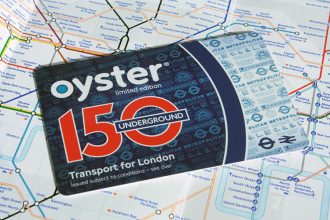
The Oyster Card is the most flexible way of travelling around London as it covers your transport needs…

If you’re moving to the UK or you’re going to travel there, you must know about some features…

The accommodation situation for students is generally difficult, as cheap accommodation is hard to find. The monthly rent is the biggest item in the monthly expenses and costs students an average of 298 euros per month…

A survey of 11,000 international students found that three in 10 plan to stay permanently in Germany after finishing their studies, four…

There are great opportunities for anyone wishing to pursue postgraduate studies in Germany…

How children can travel abroad without a supervision – Unaccompanied service for children…

Planning the semester or degree abroad includes a lot of work. There are many questions to be solved…

Higher level education institutions in Ireland encourage a great deal of independent learning…

So you’ve completed your studies at an Irish university and you want to remain in the country to work after your graduation…

The impact of research in Ireland is visible in natural sciences, social sciences and humanities…

Most of the job search engines, career sites and economists agree that the top growth industries include…

It’s not unusual for a parent to not share the same surname as their child – this applies to almost 30 per cent…

A diploma is a higher education programme that provides advanced knowledge and practical skills learning in a specific career field. Diploma programmes usually last for one to two years…

For those keen to study in Canada but in need of financial support, we’ve rounded up a selection of scholarships…

Centennial College offers more than 95 diploma and certificate programs in business, communications, community and health studies, science and engineering technology…

If you’re moving to the UK for language courses, college, university or internship, packing can be a stressful process…

Finished your studies and interested in staying in Canada either temporarily or permanently to work? This section provides information…

For international students hoping to live and work in the US after they graduate, there are many challenges to overcome; more so than in most other countries, in fact…..

Student life in the United States is an incredibly unique experience, especially when compared to the experience that you may get in a country like the United Kingdom or Canada….

Generally speaking, plagiarism means you take someone else’s work or ideas and pass them off as your own….

The United States has always been perceived as a country that can open the doors to a number of opportunities….

In the UK most students take GCSE or IGCSE exams aged 16 or 17. After this they may stay on at school…

Popular specialisations and faculties for students…

More than 15,670 institutions offer business degrees at all levels, and nearly a quarter of a million MBA students…

University courses in the fields of business and management are among the most popular worldwide…

The jobs market for new graduates is getting tougher, with average starting salaries remaining stagnant…

A personal statement is an extended essay about yourself and a key part of your Ucas application…

With so many courses and many similar ones out there, find out more about comparing them…