
Entry Requirements for Foreign Students
There are more than 2,500 private schools in the UK educating children from all over the world…

 The General Certificate of Secondary Education (GCSE) is the official examination which completes High School education in the UK, usually when the students are 16 years old.
General Certificate of Secondary Education is a two-year study plan which provides a solid secondary education foundation before choosing the right study pathway on to university.
GCSE qualifications are recognised worldwide and are the ideal gateway to further academic study in the UK and beyond.
Students will follow a mixed curriculum including science, mathematics and humanities subjects. They can expect to prepare for GCSE exams in a range of subjects, depending on aptitude and language proficiency.
Subjects include: Arts, Business, English, Geography, History, Information Technology, Mathematics, PHSE, Science, Physical Education.
There is also the opportunity for students to participate in a range of extracurricular activities such as Young Enterprise and the inter-college debating society.
Course structure
Students on the Accelerated and Standard study plans study the same subjects and attend the same number of total taught lessons per week but the distribution of the lessons changes.
Pre-programme
A flexible programme of study designed to prepare students to study A-level, International Baccalaureate or University Foundation, with the option of GCSE or IGCSE if required.
An overview of the British Education System
Age 3–4: In the UK, many children start their education aged 3 or 4 by attending a nursery school, playgroup or the reception or nursery class of a primary school. This education is not compulsory.
Age 4–16: Full-time education is compulsory for all UK children and teenagers between the ages of five and 16. All UK children are entitled to a free place at a state school between these ages.
Primary education is for children aged four or five up to 11 or 13. Terms you might hear are primary school, infant school, junior school, pre-preparatory (pre-prep) school and preparatory (prep) school. The terms ‘pre-preparatory’ and ‘preparatory’ are most commonly used in the independent sector.
Secondary education is for pupils aged 11 or 13 to 16. Terms you might hear are secondary school, high school and senior school. The term ‘senior school’ is more commonly used in the independent sector.
Age 16 and over: After the end of compulsory education, students might enter further education and then higher education.
Would you like to find out more about the programme
and application deadlines?
The main stages of working with us,
when your child applies
to the boarding school
Read more about Higher Education
There are more than 2,500 private schools in the UK educating children from all over the world…

The United Kingdom has long been a country noted for the academic excellence of its boarding schools…

Choosing the right A-level subjects can feel really tough, but if you are methodical, take your time…
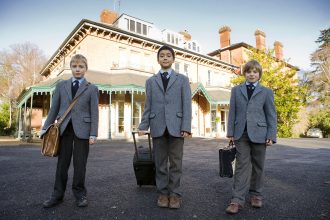
Boarding is about learning how to live. Boarders grow in confidence, independence and emotional resilience…

Deciding whether to send your child to a single-sex or co-boarding school is one of the main factors…
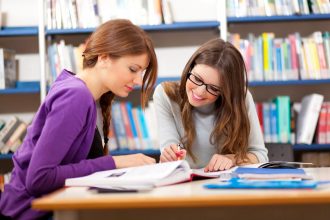
In the UK most students take GCSE or IGCSE exams aged 16 or 17. After this they may stay on at school…