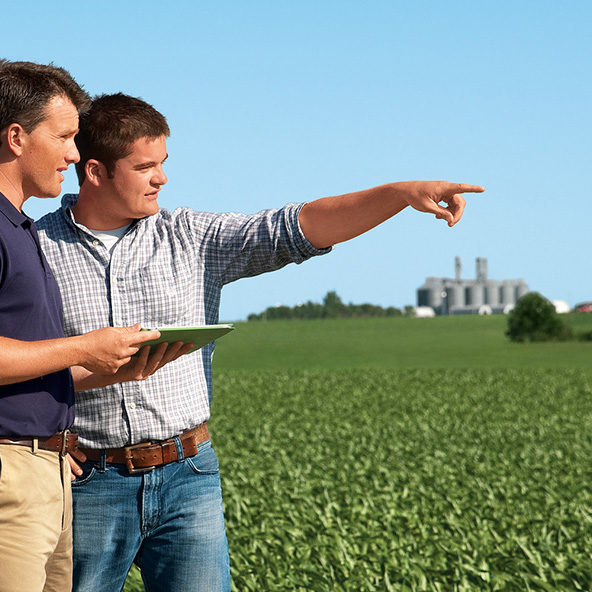
Agriculture and Farm Management
This course focuses on the skills necessary to manage an agricultural enterprise or farming business…
Read more >Читать дальше >
 A PhD, or Doctorate of Philosophy, is the highest level of degree that a student can achieve.
PhD students independently conduct original and significant research in a specific field or subject, before producing a publication-worthy dissertation.
While some Doctorates include taught components, PhD students are almost always assessed on the quality and originality of the argument presented in their independent research project.
Full-time PhDs typically last three or four years, while part-time PhDs last six or seven. However, the dissertation deadline can be extended by up to four years at the institution’s discretion. Indeed, many students who enrol on three-year PhDs only finish their dissertation in year four. Most PhDs begin in September or October.
A standard PhD is typically split into three stages. By way of illustration, a three-year PhD may follow the following pattern:
First year
You’ll meet with your supervisor to discuss your research proposal and agree an action plan with deadlines. You’ll then complete your literature review, in which you’ll evaluate and critique existing works to inform the direction of your project and ensure that your research will be original.
Second year
Your focus will shift to gathering results and developing your thesis, and potentially begin writing chapters of your dissertation. You may also present your results and ideas at academic conferences, gain teaching experience, collaborate with other students on similar projects, communicate the benefits of your research to the general public through workshops, lectures and presentations, or submit work for publication in an academic journal or book.
Third year
This phase primarily involves turning your thesis into a dissertation, though your primary research may still be in progress. After your supervisor gives their approval, you’ll submit your dissertation before undertaking a one-to-three-hour oral exam in which you’ll discuss and defend your thesis in the presence of at least one internal and external examiner.
Benefits:
Would you like to find out more about the programme
and application deadlines?
Not sure of your English Level?
Take our short online TEST to get your Level of English.
Courses
This course focuses on the skills necessary to manage an agricultural enterprise or farming business…
Read more >Читать дальше >
This course provides you with the education, knowledge, and skills necessary to gain…
Read more >Читать дальше >
Prepare for a Business or Economics degree at an English-speaking…
Read more >Читать дальше >Special Offers

There is loads to do in London, even when you are on a budget. Give your credit card a rest with these…

CEFR (Common European Framework of Reference for Languages) English levels are used by all modern English language…

This is a question that we are sure that many of you have considered: “Where should I go to learn English…

To learn English quickly, you have to work hard and smart. If you want to give yourself the best shot…

IELTS measures your reading, writing, listening and speaking skills, and assesses your ability to communicate…
We share our experts’ knowledge

You would like to sit an internationally recognized examination for German as a foreign language? SBE can offer you multiple options to prepare for such an exam formally as well as linguistically…

Learn the German Language in one of our language schools in Berlin, Frankfurt, Hamburg or Munich etc. The German courses make you fit for studies at a German university and fit for life in Germany…

If your goal is to make fast progress, this course with more than 24 lessons per week is the perfect choice for an intensive language training. It differs from the Standard Course by providing possibilities…

Do you want to reach a certain goal and you want to study German successfully? Then we recommend you to take several lessons of individual instruction in addition to your group course…

Would you like to study at a German university? But don´t know how to go about it? The University Pathway Program will guide you through every step!..